An entry · Work · Life
Painter
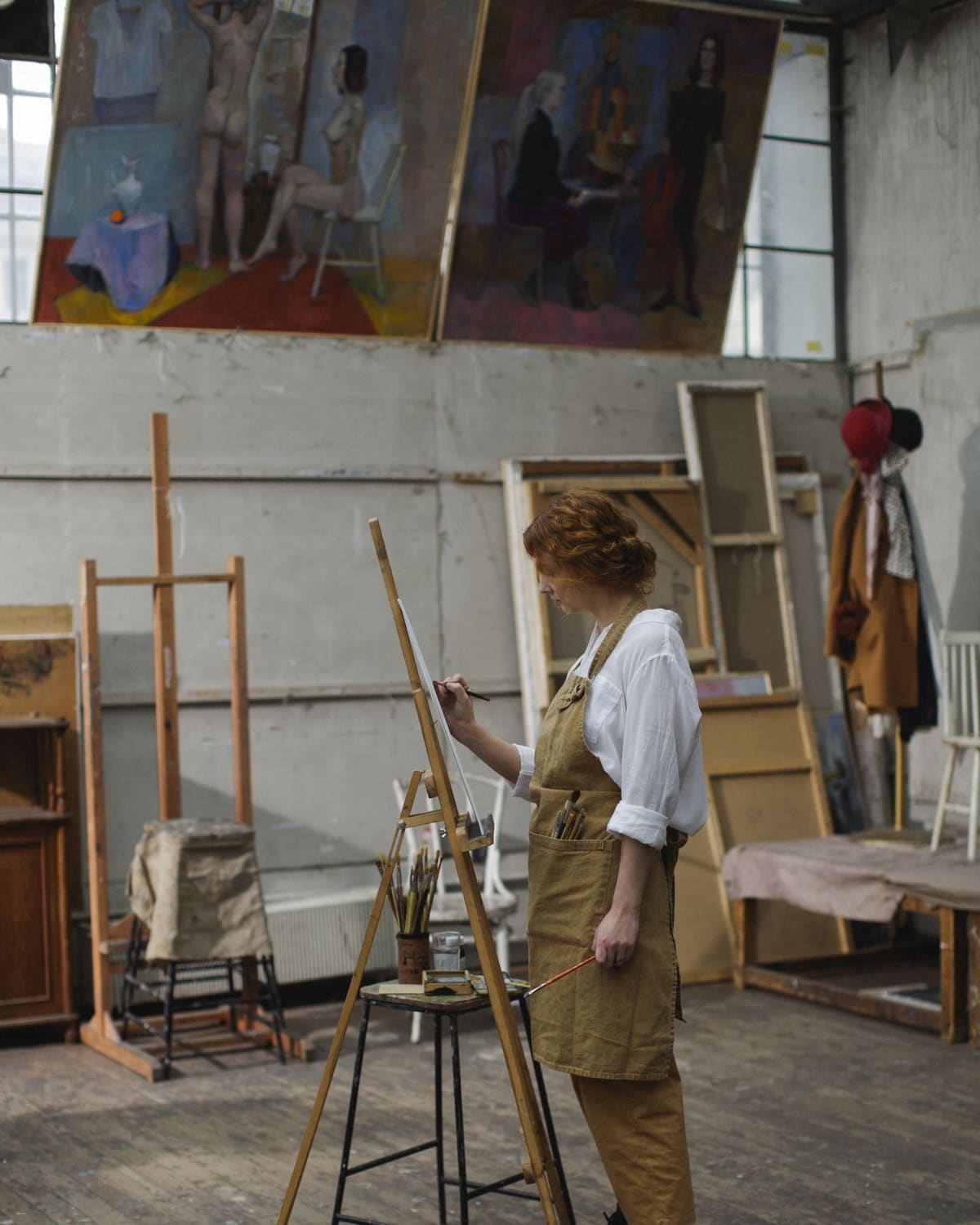
A person stands before a blank canvas and decides, stroke by stroke, what deserves to be seen.
From curious to committed
Your first steps.
A first visit can be enough. It can also be the beginning.
Meet the craft
Join a weekly oils or acrylics class at a community studio or art center and paint alongside others.
Explore experiences →Give it another afternoon
Notice what you want to come back to. Ask the teacher what regular practice would look like, and what support you would need.
Keep a note for next time →See the working day
Study painting at an art school or a classical atelier, where you build drawing and color skills through years of guided practice from life.
Explore ways into the work →These are starting points. A workshop is not a professional qualification. Entry requirements and recognised training depend on the work and the country.
Before you walk in
A few things worth asking the host before you book.
- Is this session suitable for someone who has never tried it?
- What should I bring, wear or prepare?
- What is included, and are there any extra costs?
- Can you accommodate my access needs?
- What could I try next if I enjoy it?
Teach this craft? Share what beginners ask you →
Showing Chicago, and 2 elsewhere are hidden
Show every city →Work it
Do the work.
Jobs, apprenticeships, and training that put a person in the room.
Ways in
- Course
Fine art degree or atelier training
Study painting at an art school or a classical atelier, where you build drawing and color skills through years of guided practice from life.
- Apprenticeship
Apprentice in a working studio
Assist an established painter with priming, underpainting, and studio work to learn craft and business habits up close.
- Route in
Build a body of work and show it
Paint consistently, enter open calls and group shows, and approach galleries or sell direct once you have a coherent collection.
Ways in, gathered by hand.
Add yours to the atlasLive it
Live the hour.
Experiences, classes, and places where the presence is the whole point.
Ways in
- Class
Local painting class
Join a weekly oils or acrylics class at a community studio or art center and paint alongside others.
- Gathering
Life drawing or plein air session
Show up to an open figure-drawing night or an outdoor painting meetup and work from what is in front of you.
Ways in, gathered by hand.
Add yours to the atlasWhy the human is the point
A painter starts with nothing but a stretched white rectangle and the nerve to make the first mark. Every choice after that is theirs: where the light falls, which colors sing next to each other, when a passage is finished and when it needs one more day. Stand close to a real canvas and you can read the whole history of the hand that made it, the confident strokes and the second thoughts, the places where someone pressed hard and meant it. A painting is a record of attention, one human deciding for hours what is worth looking at. That is why we hang them on our walls and stand in quiet rooms to meet them. The painter is the reason the surface has a pulse.
Kept nearby