An entry · Work · Life
Natural Dyer
A vat of leaves and time, a length of white cloth, and hands that coax living colour out of the garden.
From curious to committed
Your first steps.
A first visit can be enough. It can also be the beginning.
Meet the craft
Many dye gardens and studios run afternoon sessions where you fold, tie, and dip your own cloth and walk out with a finished piece still smelling of the vat.
Explore experiences →Give it another afternoon
Notice what you want to come back to. Ask the teacher what regular practice would look like, and what support you would need.
Keep a note for next time →See the working day
Natural dye studios and textile artists often teach multi-day intensives on vat building and mordanting, which is the fastest honest way to learn to keep an indigo vat alive.
Explore ways into the work →These are starting points. A workshop is not a professional qualification. Entry requirements and recognised training depend on the work and the country.
Before you walk in
A few things worth asking the host before you book.
- Is this session suitable for someone who has never tried it?
- What should I bring, wear or prepare?
- What is included, and are there any extra costs?
- Can you accommodate my access needs?
- What could I try next if I enjoy it?
Teach this craft? Share what beginners ask you →
Showing New York, and 3 elsewhere are hidden
Show every city →Work it
Do the work.
Jobs, apprenticeships, and training that put a person in the room.
Ways in
- Course
Study under a working dyer
Natural dye studios and textile artists often teach multi-day intensives on vat building and mordanting, which is the fastest honest way to learn to keep an indigo vat alive.
- Apprenticeship
Assist in a natural dye or textile studio
Small dye houses take on helpers to prep fibre, tend vats, and log recipes, so you learn to hit a colour reliably across seasons and water sources.
- Route in
Train through a textile arts program
Craft schools and fibre-arts diplomas cover dye chemistry, plant sourcing, and lightfastness, giving you the grounding to sell cloth that holds its colour.
Ways in, gathered by hand.
Add yours to the atlasLive it
Live the hour.
Experiences, classes, and places where the presence is the whole point.
Ways in
- Workshop
Book an indigo dyeing workshop
Many dye gardens and studios run afternoon sessions where you fold, tie, and dip your own cloth and walk out with a finished piece still smelling of the vat.
- Community
Grow and gather a dye pot at home
A few marigolds, onion skins, and avocado pits are enough to dye a scarf on the stove, and online dye communities happily talk you through your first batch.
Ways in, gathered by hand.
Add yours to the atlasWhy the human is the point
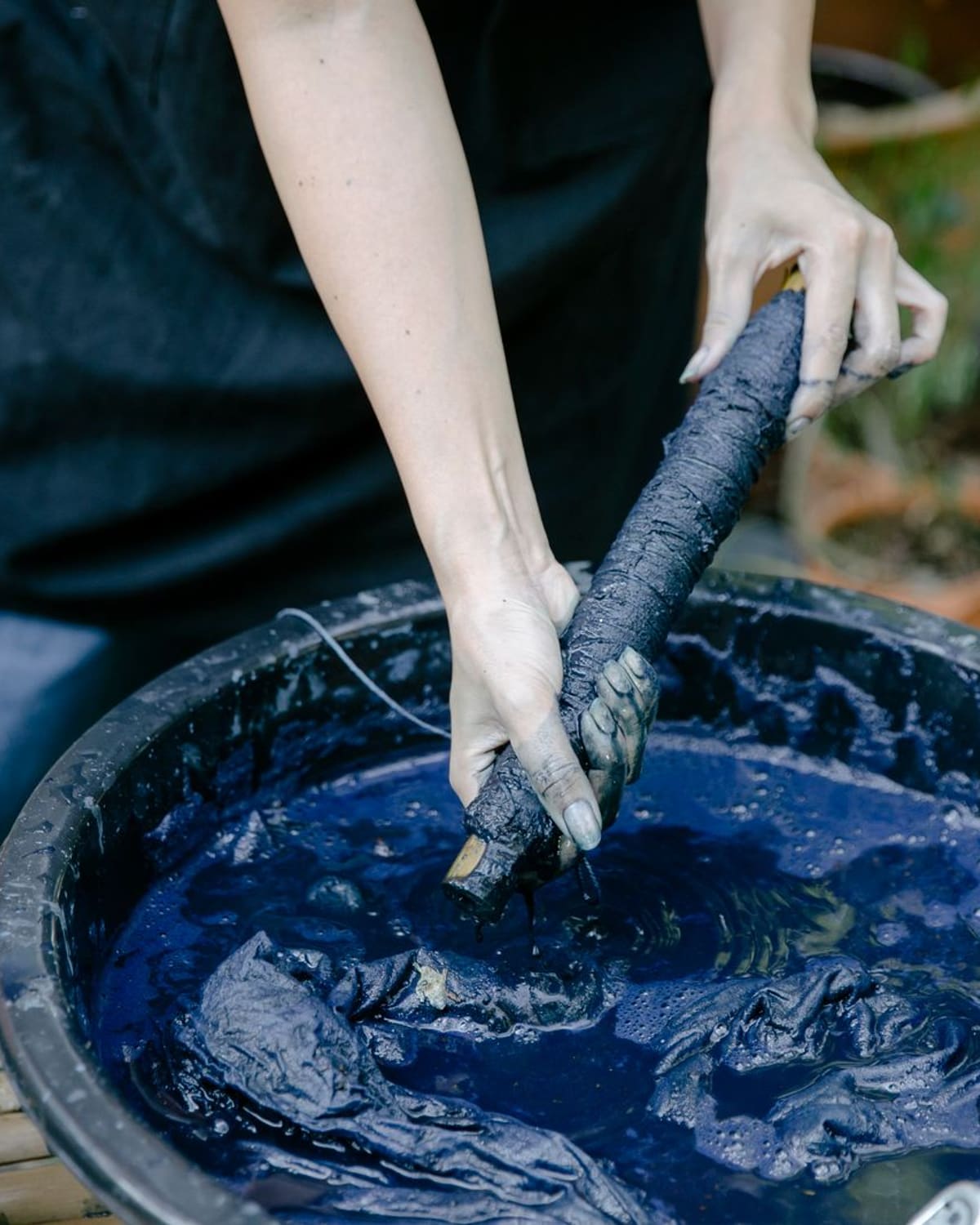
A natural dyer reads colour the way a cook reads a pot: by smell, by the sheen on the surface, by the way cloth changes as it meets the air. Indigo is the great teacher here, going into the vat a murky green and turning blue in your hands as it oxidises, a small daily miracle they never quite stop loving. Every plant gives a different gift, madder for warm reds, marigold for gold, oak galls for the quiet browns, and the dyer holds all of it in their fingertips. The blues on their hands are not a mistake, they are the receipt. No two batches are ever identical, which is exactly the point, because a real hand and a real leaf made this exact shade once and will never repeat it. Wear it and you carry a little of that afternoon with you.
Kept nearby