An entry · Work · Life
Lace Maker
Irish needle lace, drawn stitch by stitch on fine net, still taught by the women who kept it.
From curious to committed
Your first steps.
A first visit can be enough. It can also be the beginning.
Meet the craft
Ask a local practitioner how a beginner can watch, visit or try the work under guidance.
Explore experiences →Give it another afternoon
Notice what you want to come back to. Ask the teacher what regular practice would look like, and what support you would need.
Keep a note for next time →See the working day
Ask a practitioner about the training, routine tasks and costs behind the work before making a commitment.
Explore ways into the work →These are starting points. A workshop is not a professional qualification. Entry requirements and recognised training depend on the work and the country.
Before you walk in
A few things worth asking the host before you book.
- Is this session suitable for someone who has never tried it?
- What should I bring, wear or prepare?
- What is included, and are there any extra costs?
- Can you accommodate my access needs?
- What could I try next if I enjoy it?
Teach this craft? Share what beginners ask you →
Work it
Do the work.
Jobs, apprenticeships, and training that put a person in the room.
Add yours to the atlasLive it
Live the hour.
Experiences, classes, and places where the presence is the whole point.
Add yours to the atlasWhy the human is the point
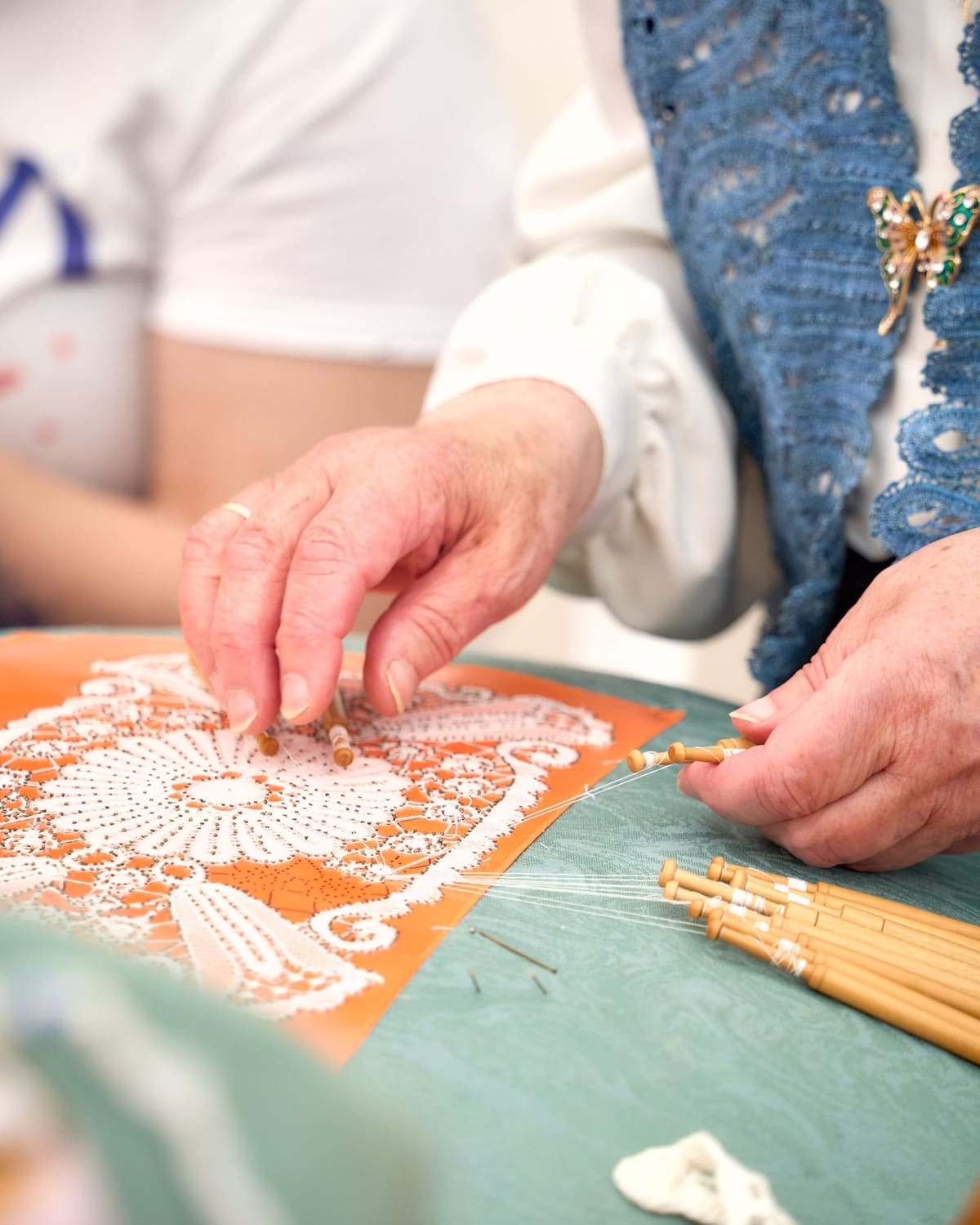
Irish needle lace is not woven and not knitted. It is drawn. In Carrickmacross the maker lays fine muslin over machine net, tacks the design through both layers, outlines it with a couched thread and then cuts the surplus muslin away with tiny scissors, so the pattern seems to float. Kenmare is a different craft again, a raised needlepoint built entirely from buttonhole stitch worked over a paper pattern, brought to the town by the Poor Clare nuns in 1861 and taught to local girls as a way of earning. Both were skills of hard decades, ways of putting money into houses that had none, and both survived for the same reason: women kept teaching them to other women. They are still doing it. There are classes in Kenmare, a co-operative and gallery in Carrickmacross, and a national guild running lace days around the country every year.
Kept nearby