An entry · Work it
Coffee Roaster
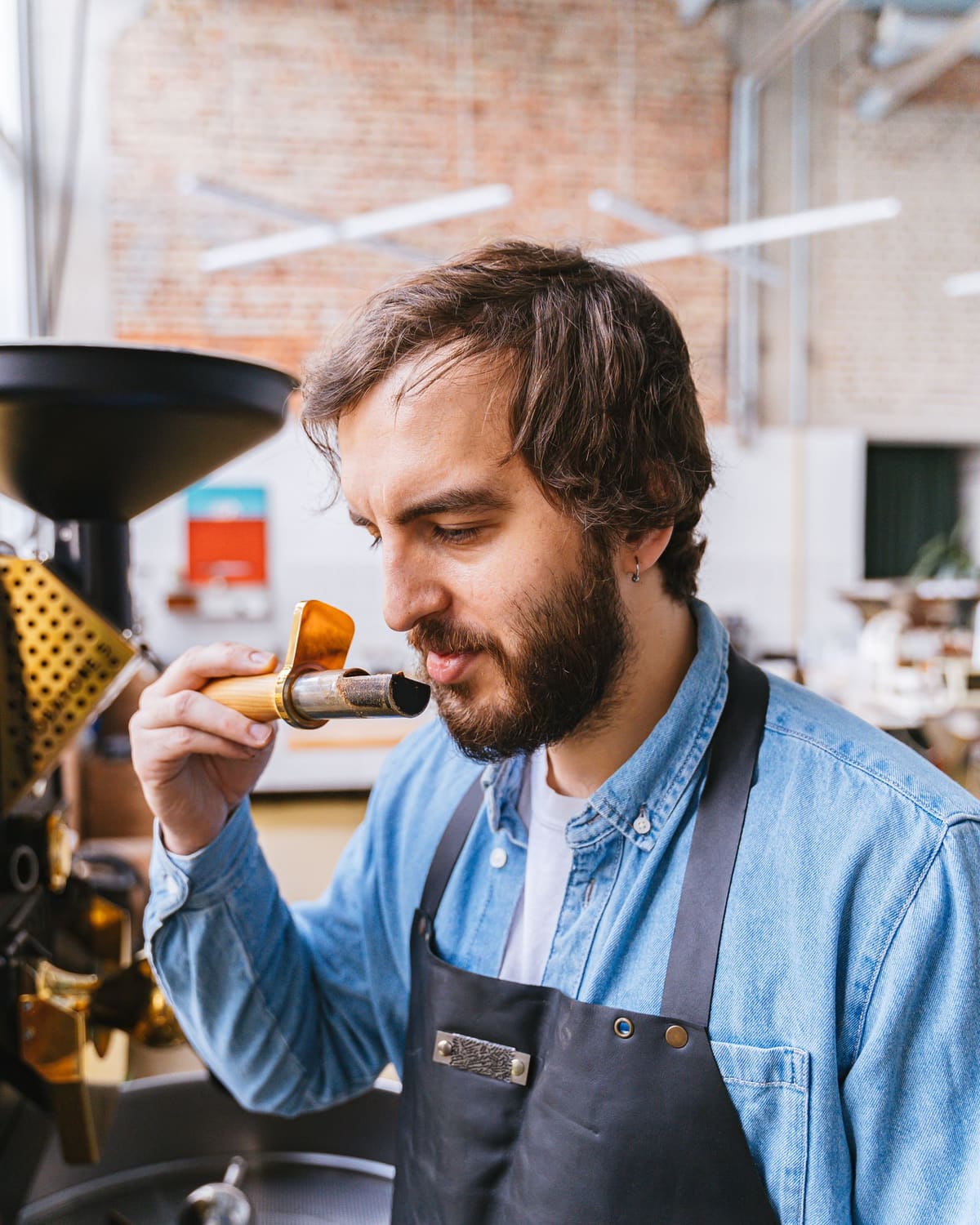
Green beans, a hot drum, and a nose that catches the exact second raw turns to caramel.
From curious to committed
Your first steps.
A first visit can be enough. It can also be the beginning.
Meet the craft
Roasteries and specialty cafes host tastings where you slurp, score, and compare coffees side by side, and it retunes how you taste every cup after.
Explore experiences →Give it another afternoon
Notice what you want to come back to. Ask the teacher what regular practice would look like, and what support you would need.
Keep a note for next time →See the working day
Many roasteries hire packers and production assistants first, and that is the room where you learn to weigh, log, and eventually pull your own roasts.
Explore ways into the work →These are starting points. A workshop is not a professional qualification. Entry requirements and recognised training depend on the work and the country.
Before you walk in
A few things worth asking the host before you book.
- Is this session suitable for someone who has never tried it?
- What should I bring, wear or prepare?
- What is included, and are there any extra costs?
- Can you accommodate my access needs?
- What could I try next if I enjoy it?
Teach this craft? Share what beginners ask you →
Showing Portland
Show every city →Work it
Do the work.
Jobs, apprenticeships, and training that put a person in the room.
Places to begin
- Course
Specialty Coffee Association
SCA Coffee Roasting Program
Worldwide
The global coffee body's roasting program takes you from Foundation through Professional with real machine time and an industry recognised diploma.
- Association
Australian Specialty Coffee Association (ASCA)
Australian Specialty Coffee Association
Australia
Australia's specialty coffee industry body supports roasters through skill workshops, accredited judging pathways and a national roasting championship run to World Coffee Events rules.
Ways in
- Entry job
Start behind the roaster
Many roasteries hire packers and production assistants first, and that is the room where you learn to weigh, log, and eventually pull your own roasts.
- Course
Take a professional roasting course
Roasting schools and green-coffee suppliers teach roast profiling and defect analysis, giving you the vocabulary and the palate to develop a coffee on purpose.
- Certification
Earn a recognised roasting credential
Coffee trade bodies offer graded roasting and sensory certifications that employers know, which helps you move from helper to head roaster.
Ways in, gathered by hand.
Add yours to the atlasLive it
Live the hour.
Experiences, classes, and places where the presence is the whole point.
Places to begin
- Tasting
Coava Coffee Roasters
Public Coffee Cupping
Portland, Oregon · Every other week
Every other week Coava's Portland roastery opens a guided cupping table where you taste like their team and take home a fresh bag of beans.
- Class
Buckman Coffee Factory
Coffee Roasting Foundations 101
Portland, Oregon
Get hands-on with green beans and a roaster to learn the fundamentals of coffee roasting at this shared Portland roasting incubator.
- Tour
Around Portland Tours
Coffee Roasters of Portland Eastside Walking Tour
Portland, Oregon · Wednesday to Sunday
Stroll Portland's eastside with a passionate guide, tasting and learning how neighborhood roasters bring beans to life.
Ways in
- Tasting
Sit in on a public cupping
Roasteries and specialty cafes host tastings where you slurp, score, and compare coffees side by side, and it retunes how you taste every cup after.
- Community
Try home roasting a small batch
A popcorn-style roaster or a pan and a handful of green beans is enough to hear first crack yourself, and home-roasting forums love a beginner.
Ways in, gathered by hand.
Add yours to the atlasWhy the human is the point
A coffee roaster listens to the beans. There is a first crack that sounds like distant popcorn and a second that comes faster and softer, and somewhere in that window a person decides the coffee is done. They roast by ear and by smell and by the colour tumbling in the drum, chasing the sweetness in a particular lot from a particular farm without scorching what makes it special. Pull it a few seconds early or late and the cup changes entirely, so the roaster stays close, adjusting the flame, learning each bean like a new piece of music. What lands in your cup is one person's read on that harvest, cooled and rested and ready. Every good bag is a judgement call someone was proud to make.
Kept nearby