An entry · Work · Life
Cobbler
The shoe you love is not dead. It is waiting for the person who can bring it back.
From curious to committed
Your first steps.
A first visit can be enough. It can also be the beginning.
Meet the craft
Take your best worn shoes to a real cobbler instead of the bin.
Explore experiences →Give it another afternoon
Notice what you want to come back to. Ask the teacher what regular practice would look like, and what support you would need.
Keep a note for next time →See the working day
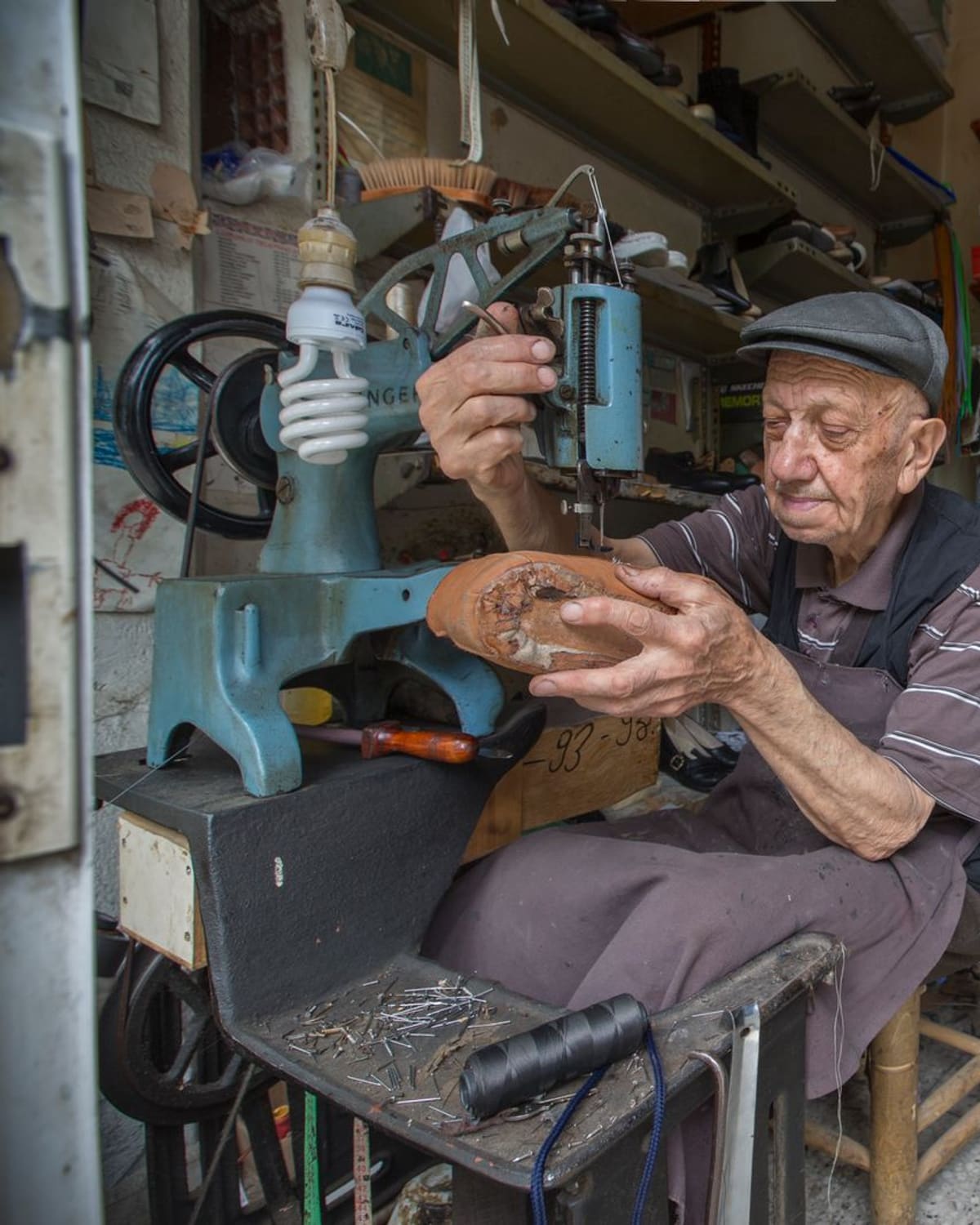
Learn resoling, stitching, and the machines under a working cobbler.
Explore ways into the work →These are starting points. A workshop is not a professional qualification. Entry requirements and recognised training depend on the work and the country.
Before you walk in
A few things worth asking the host before you book.
- Is this session suitable for someone who has never tried it?
- What should I bring, wear or prepare?
- What is included, and are there any extra costs?
- Can you accommodate my access needs?
- What could I try next if I enjoy it?
Teach this craft? Share what beginners ask you →
Work it
Do the work.
Jobs, apprenticeships, and training that put a person in the room.
Places to begin
- Course
Shoemaking Courses Online
Professional shoemaking courses
Online
Structured video courses from the basics to welted construction; a professional online school since 2013.
- Course
London College of Fashion
The Complete Shoemaking and Footwear Short Course
East Bank, London · Next start January 2027
Pattern cutting, leather stitching and industrial machines in the LCF footwear studios, the techniques professional manufacture runs on.
- Association
Cordwainers
Study footwear
City of London
The City livery company for shoemakers keeps the list of degrees, diplomas and apprenticeships, including the Level 2 footwear manufacturer route.
Ways in
- Apprenticeship
Shoe repair apprenticeship
Learn resoling, stitching, and the machines under a working cobbler.
- Course
Shoemaking and leatherwork course
Formal training in lasts, patterns, and hand-stitching.
- Entry job
Cobbler's shop job
Small repair shops hire and teach; the bench is the classroom.
Ways in, gathered by hand.
Add yours to the atlasLive it
Live the hour.
Experiences, classes, and places where the presence is the whole point.
Places to begin
- Workshop
The Shoe Surgeon
Make your own shoes
In person + online
A hands-on shoemaking class covering patterning, cutting, sewing, and lasting; no experience needed.
- Class
Carreducker
Handsewn Shoemaking Classes
London
Learn to make a pair of shoes by hand over a ten-week term with master shoemakers, with rolling start dates through the year.
- Workshop
I Can Make Shoes
3-Day Shoemaking
Bethnal Green, London
Three days at the benches in the Pill Box Studios, or one to one tuition in the same workshop.
Ways in
- Visit
Resole a pair you love
Take your best worn shoes to a real cobbler instead of the bin.
- Class
Leatherwork class
Stitch a small item by hand and feel where the craft begins.
Ways in, gathered by hand.
Add yours to the atlasWhy the human is the point
We are taught to throw shoes away. The cobbler disagrees, one repair at a time. They read the wear pattern like handwriting, know which sole can be saved and which seam will hold, and give a loved pair another few years on the road. It is quiet resistance to a throwaway world, done with an awl and a stitching machine older than you. A person deciding that a made thing is worth keeping is worth keeping too.
Kept nearby