An entry · Work it
Radiographer
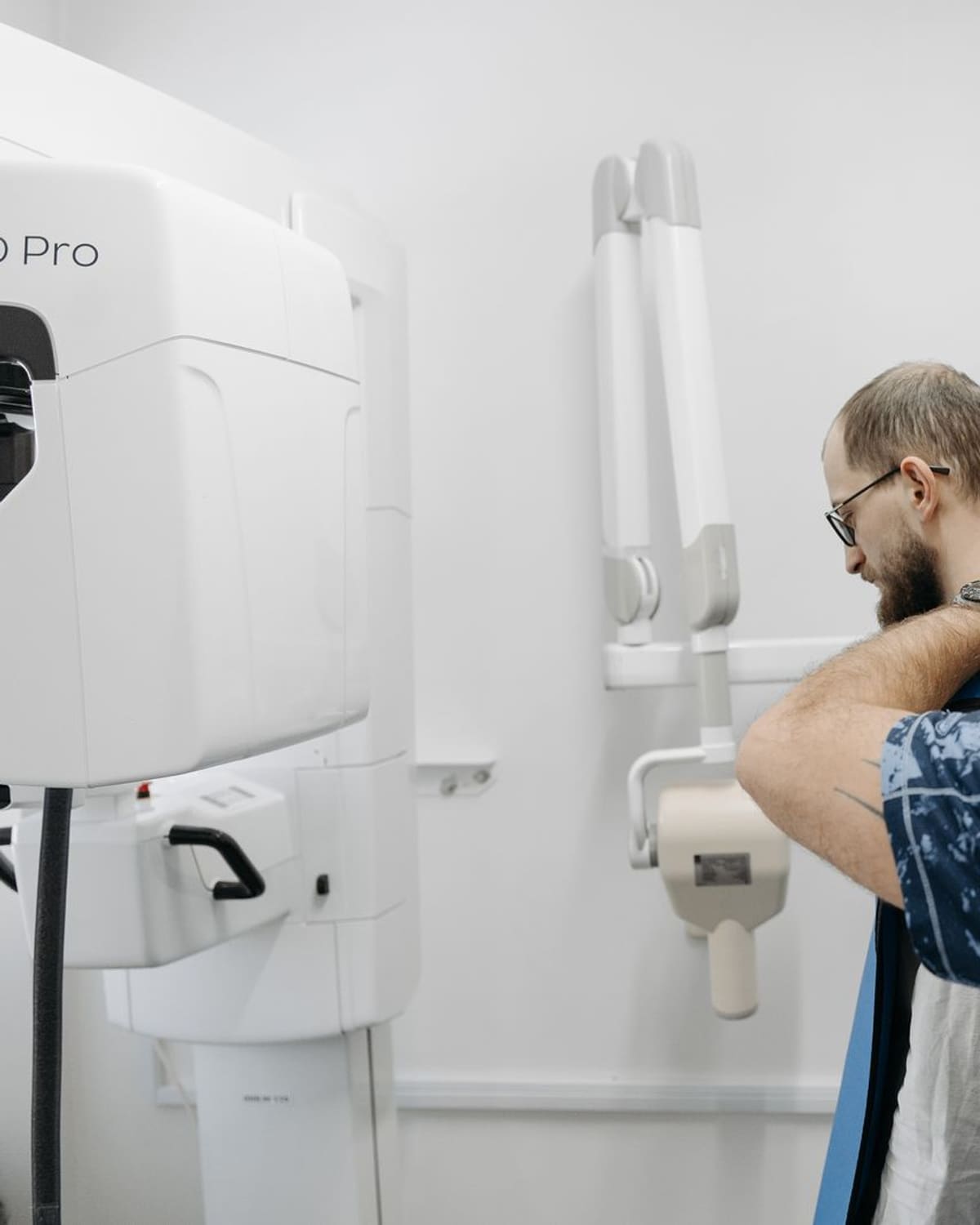
The person who reads your body in light and shadow, and holds still long enough to get it right.
From curious to committed
Your first steps.
A first visit can be enough. It can also be the beginning.
Meet the craft
Many radiography programmes host open days where you can see the equipment and talk with students about the work.
Explore experiences →Give it another afternoon
Notice what you want to come back to. Ask the teacher what regular practice would look like, and what support you would need.
Keep a note for next time →See the working day
Most radiographers train through a recognised degree or diploma in diagnostic radiography, blending anatomy, physics and clinical placements.
Explore ways into the work →These are starting points. A workshop is not a professional qualification. Entry requirements and recognised training depend on the work and the country.
Before you walk in
A few things worth asking the host before you book.
- Is this session suitable for someone who has never tried it?
- What should I bring, wear or prepare?
- What is included, and are there any extra costs?
- Can you accommodate my access needs?
- What could I try next if I enjoy it?
Teach this craft? Share what beginners ask you →
Work it
Do the work.
Jobs, apprenticeships, and training that put a person in the room.
Places to begin
- Association
American Society of Radiologic Technologists
ASRT Student Membership
United States
While you train in an imaging program you can join the profession's own society, get study help, and step into full membership once you certify.
- Association
Society of Radiographers
Society of Radiographers membership
London, England
The Society of Radiographers is the long established British professional body and union for radiographers, welcoming everyone working in clinical imaging, radiotherapy and oncology.
- Certification
Canadian Association of Medical Radiation Technologists (CAMRT)
Canadian Association of Medical Radiation Technologists
Canada
The Canadian Association of Medical Radiation Technologists is Canada's national professional association and certifying body for radiographers and other medical radiation technologists.
Ways in
- Course
Diploma in radiography
Most radiographers train through a recognised degree or diploma in diagnostic radiography, blending anatomy, physics and clinical placements.
- Route in
Hospital clinical placement
Training programmes place you inside a real imaging department, where you learn positioning and radiation safety beside working radiographers.
- Certification
Professional imaging registration
To practise you register with the national radiography or medical imaging board, which certifies you are safe to work with patients and equipment.
Ways in, gathered by hand.
Add yours to the atlasLive it
Live the hour.
Experiences, classes, and places where the presence is the whole point.
Ways in
- Visit
Open day at an imaging school
Many radiography programmes host open days where you can see the equipment and talk with students about the work.
- Class
Anatomy and physiology class
A community or evening anatomy course gets you close to the body knowledge that sits at the heart of imaging.
Ways in, gathered by hand.
Add yours to the atlasWhy the human is the point
Step into the imaging room and the first thing you meet is a calm voice asking you to breathe in and hold. Behind the machine stands someone whose whole craft is patience and precision, angling you just so, shielding what should be shielded, catching the one frame a doctor needs to see clearly. A radiographer carries a quiet responsibility, because the picture they make becomes part of how your care unfolds. They know that a frightened person cannot hold still, so they steady you first with kindness and then with skill. When the image is clean and true, it is because a human decided it was worth doing right the first time. That is trust you can feel, even lying flat on a cold table.
Kept nearby