An entry · Work · Life
Violinist
One person, four strings, and a melody that seems to come straight from the chest.
From curious to committed
Your first steps.
A first visit can be enough. It can also be the beginning.
Meet the craft
A local teacher or music school can start you from the first open string, and adults are just as welcome as kids.
Explore experiences →Give it another afternoon
Notice what you want to come back to. Ask the teacher what regular practice would look like, and what support you would need.
Keep a note for next time →See the working day
Most orchestral violinists study for years at a music conservatory or university program, building tone and repertoire under a master teacher.
Explore ways into the work →These are starting points. A workshop is not a professional qualification. Entry requirements and recognised training depend on the work and the country.
Before you walk in
A few things worth asking the host before you book.
- Is this session suitable for someone who has never tried it?
- What should I bring, wear or prepare?
- What is included, and are there any extra costs?
- Can you accommodate my access needs?
- What could I try next if I enjoy it?
Teach this craft? Share what beginners ask you →
Showing New York, and 1 elsewhere is hidden
Show every city →Work it
Do the work.
Jobs, apprenticeships, and training that put a person in the room.
Places to begin
- Association
American String Teachers Association
Membership for String Teachers and Players
United States · Ongoing membership
The American String Teachers Association connects violinists and teachers with resources, mentors, and a welcoming professional community.
- Certification
ABRSM
ABRSM Performance Diplomas
United Kingdom
UK graded performance diplomas (ARSM, LRSM, and FRSM) that let advanced violinists earn internationally recognised credentials beyond Grade 8.
Ways in
- Conservatory
Conservatory training
Most orchestral violinists study for years at a music conservatory or university program, building tone and repertoire under a master teacher.
- Route in
Private study from childhood
Many begin young with weekly private lessons, often through methods like Suzuki, then work up through graded exams and youth orchestras.
- Company
Orchestra and ensemble seats
Professionals audition for chairs in symphony, chamber, and pit orchestras, or build a freelance life of sessions, weddings, and teaching.
Ways in, gathered by hand.
Add yours to the atlasLive it
Live the hour.
Experiences, classes, and places where the presence is the whole point.
Ways in
- Class
Take beginner lessons
A local teacher or music school can start you from the first open string, and adults are just as welcome as kids.
- Gathering
Hear one live and close
Catch a recital, a chamber concert, or a busker, and sit near enough to watch the bow arm work.
Ways in, gathered by hand.
Add yours to the atlasWhy the human is the point
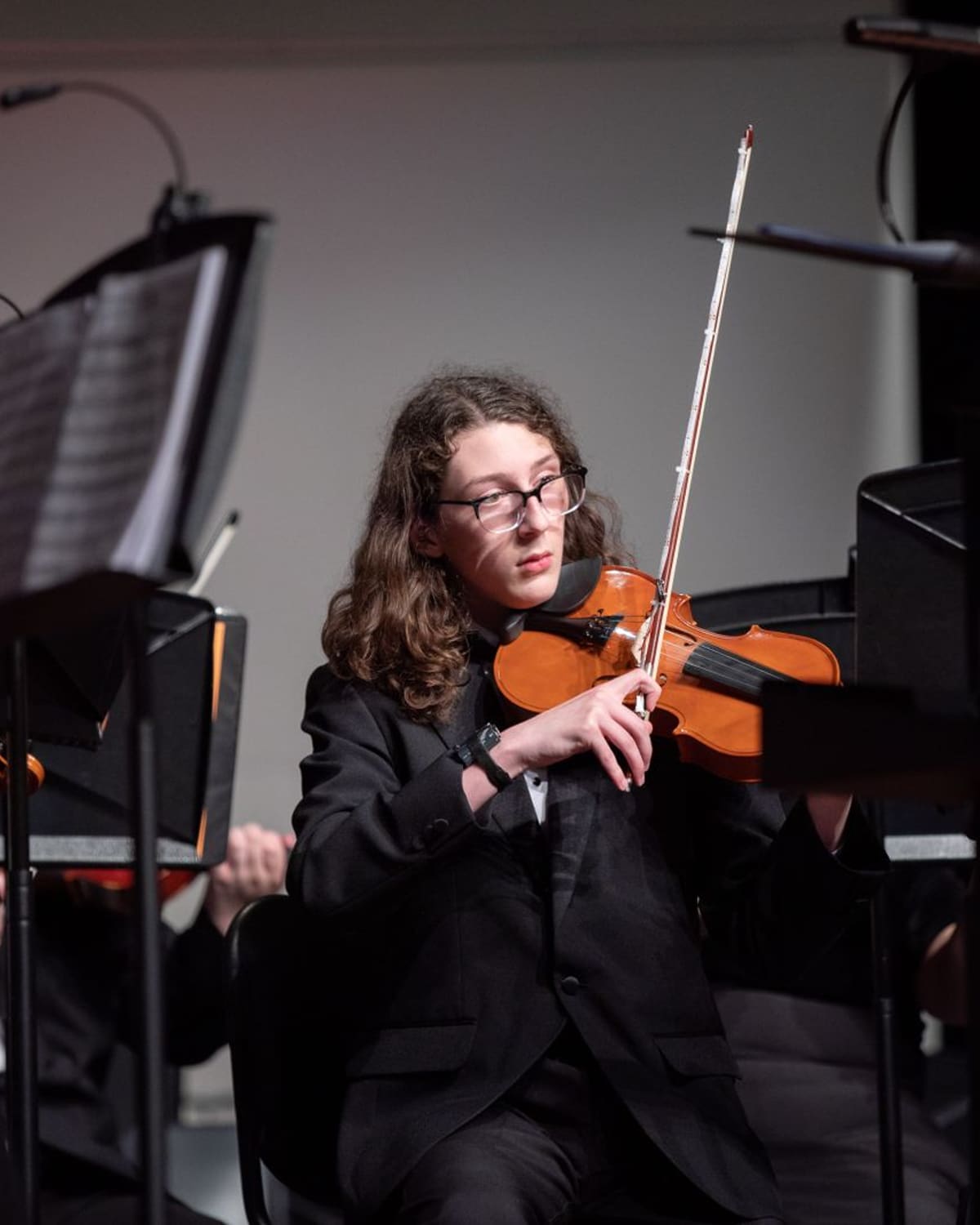
The violin sits under the chin like a secret, and for centuries a single player has been able to make a whole hall go quiet with it. A violinist bends a line of notes the way a voice bends a sentence, leaning into one phrase and hushing the next, so the same piece is never quite the same twice. Up close you can see the whole body playing: the breath, the sway, the tiny decisions in the bow arm that turn ink on a page into something alive. In an orchestra they catch each other's eyes across the stands and move as one; on a street corner they play to whoever slows down to listen. Wherever they set up, the violinist reminds us that music is a thing people make with their hands, in a room, for each other.
Kept nearby