An entry · Live it
Surfer
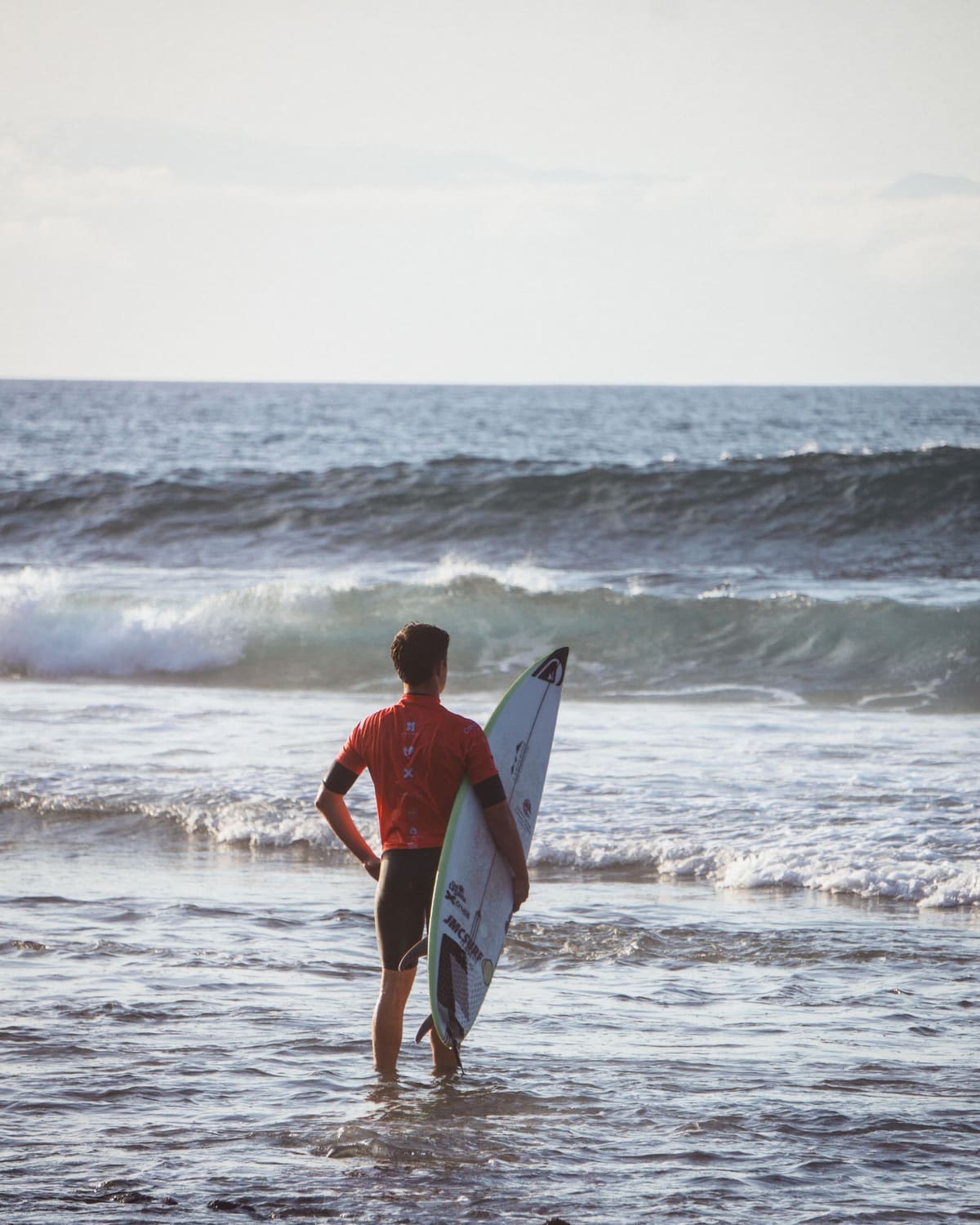
A surfer reads the whole living ocean with nothing but a body, a board, and the nerve to paddle out.
From curious to committed
Your first steps.
A first visit can be enough. It can also be the beginning.
Meet the craft
Book a morning with a local surf school, where a patient instructor pushes you into your first gentle waves and stays close until you feel the board come alive under your feet.
Explore experiences →Give it another afternoon
Notice what you want to come back to. Ask the teacher what regular practice would look like, and what support you would need.
Keep a note for next time →See the working day
National surfing bodies and international programs certify instructors in water safety, teaching progressions, and rescue skills, so you can lead lessons with confidence at schools and camps almost anywhere there is a coast.
Explore ways into the work →These are starting points. A workshop is not a professional qualification. Entry requirements and recognised training depend on the work and the country.
Before you walk in
A few things worth asking the host before you book.
- Is this session suitable for someone who has never tried it?
- What should I bring, wear or prepare?
- What is included, and are there any extra costs?
- Can you accommodate my access needs?
- What could I try next if I enjoy it?
Teach this craft? Share what beginners ask you →
Showing San Diego, and 1 elsewhere is hidden
Show every city →Work it
Do the work.
Jobs, apprenticeships, and training that put a person in the room.
Places to begin
- Certification
International Surfing Association
ISA Surf Instructor and Coach Certification
International
The world governing body for surfing certifies instructors and coaches at every level through a recognized program taught by trainers around the globe.
- Association
Surfing England
Surfing England
United Kingdom
The national governing body for surfing in England, a not-for-profit run by surfers that offers membership, events and community for surfers of all kinds.
Ways in
- Certification
Earn a surf instructor certification
National surfing bodies and international programs certify instructors in water safety, teaching progressions, and rescue skills, so you can lead lessons with confidence at schools and camps almost anywhere there is a coast.
- Route in
Start on the beach as an assistant
Many surf schools take on strong local surfers as beach marshals and assistants first, where you learn to keep a class safe, spot rip currents, and read conditions before you ever run a group of your own.
- Course
Train in ocean rescue and first aid
A current lifesaving, CPR, and first aid qualification is the backbone of coaching in the water, and most schools and events will ask to see it before they let you take students out past the break.
Ways in, gathered by hand.
Add yours to the atlasLive it
Live the hour.
Experiences, classes, and places where the presence is the whole point.
Ways in
- Class
Take a beginner surf lesson
Book a morning with a local surf school, where a patient instructor pushes you into your first gentle waves and stays close until you feel the board come alive under your feet.
- Community
Join a local surf club or dawn patrol
Most beach towns have a friendly crew that paddles out at first light, and showing up regularly is the fastest way to learn the break, the etiquette, and the people who love it.
Ways in, gathered by hand.
Add yours to the atlasWhy the human is the point
Long before anyone measured a swell, someone stood at the shoreline and learned to read water the way you read a friend's face. The surfer is that reader still, feeling the pulse of the ocean through the soles of the feet and the tilt of a board. Every wave is a first draft that never repeats, so the whole craft lives in presence, in the split second between paddling and standing. There is a body in the water here, wholly awake, negotiating with something far bigger than itself and finding grace inside it. That is the joy of it, a person and a sea meeting on the sea's own terms. It reminds us that we are the animal that loves to play at the edge of the wild.
Kept nearby