An entry · Work it
Stevedore
The strong back and sure feet at the water's edge who move the world's cargo one honest load at a time.
From curious to committed
Your first steps.
A first visit can be enough. It can also be the beginning.
Meet the craft
Many ports and maritime museums let you watch cargo handling up close and learn the trade's long history.
Explore experiences →Give it another afternoon
Notice what you want to come back to. Ask the teacher what regular practice would look like, and what support you would need.
Keep a note for next time →See the working day
Modern ports hire through dock labour schemes and require safety, rigging and manual-handling inductions before you join a gang.
Explore ways into the work →These are starting points. A workshop is not a professional qualification. Entry requirements and recognised training depend on the work and the country.
Before you walk in
A few things worth asking the host before you book.
- Is this session suitable for someone who has never tried it?
- What should I bring, wear or prepare?
- What is included, and are there any extra costs?
- Can you accommodate my access needs?
- What could I try next if I enjoy it?
Teach this craft? Share what beginners ask you →
Showing San Francisco, and 1 elsewhere is hidden
Show every city →Work it
Do the work.
Jobs, apprenticeships, and training that put a person in the room.
Places to begin
- Union
International Longshore and Warehouse Union
ILWU Coast Longshore Division
West Coast, United States
This is the union that has represented dockworkers moving West Coast cargo since the 1930s, standing behind good pay and safety on the waterfront.
- Association
Port Skills and Safety (PSS)
Port Skills and Safety
United Kingdom
Port Skills and Safety is the UK membership body that sets the national occupational standards, safety guidance and qualifications for stevedores and other port workers.
Ways in
- Route in
Port and stevedoring induction
Modern ports hire through dock labour schemes and require safety, rigging and manual-handling inductions before you join a gang.
- Entry job
General dock labourer entry
Many stevedores start in general port or warehouse labour, proving reliability and strength before training on cargo handling.
- Certification
Rigging and slinging certificate
Certificated training in slinging loads and container lashing is standard, since moving heavy cargo safely is the heart of the job.
Ways in, gathered by hand.
Add yours to the atlasLive it
Live the hour.
Experiences, classes, and places where the presence is the whole point.
Ways in
- Visit
Visit a working harbour or port museum
Many ports and maritime museums let you watch cargo handling up close and learn the trade's long history.
- Visit
Tour a container terminal
Some terminals run public or group tours where you see stevedores and cranes working a live berth.
Ways in, gathered by hand.
Add yours to the atlasWhy the human is the point
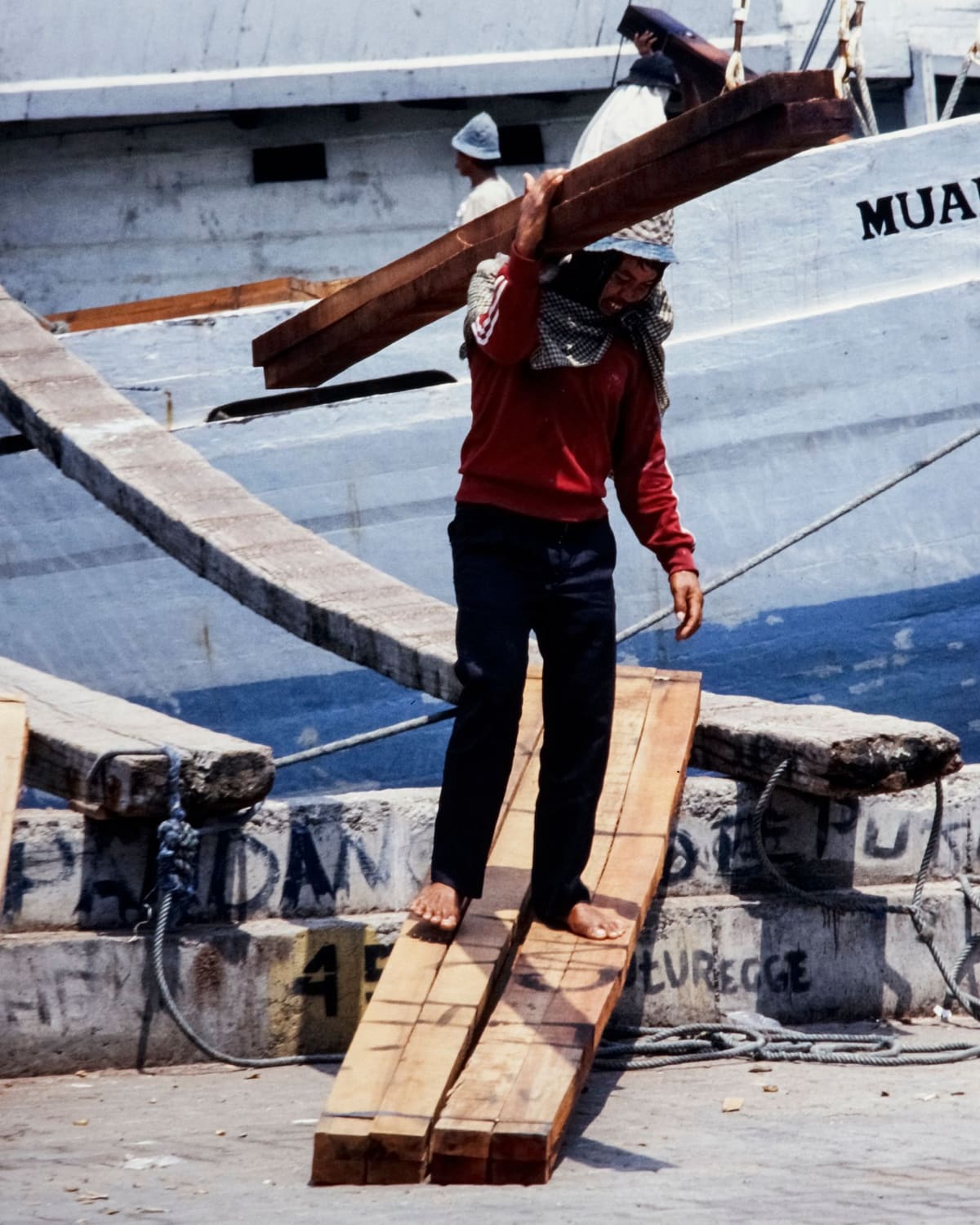
Everything you own crossed water on a ship, and at some point a human being helped it on or off with skill you never see. A stevedore is that person at the quayside, balancing timber on a shoulder down a narrow plank, lashing containers against the swell, reading the load and the weather and the tide. It is old, physical work with a living pulse, because the docks still need judgement, balance and a body that knows how to move weight safely. There is a rhythm to a working gang, a call and a nod, a trust that the person beside you will take their share. To watch it done well is to see the dignity of plain hard labour, muscle and timing and pride. The harbour runs because these hands turn up.
Kept nearby