An entry · Work · Life
Cellist
The one instrument you hold in your arms like a person, singing in the register of the human voice.
From curious to committed
Your first steps.
A first visit can be enough. It can also be the beginning.
Meet the craft
Music schools and independent teachers rent small cellos and start absolute beginners, including grown-ups.
Explore experiences →Give it another afternoon
Notice what you want to come back to. Ask the teacher what regular practice would look like, and what support you would need.
Keep a note for next time →See the working day
Serious cellists train for years at a conservatory or music school, refining technique and repertoire with a dedicated teacher.
Explore ways into the work →These are starting points. A workshop is not a professional qualification. Entry requirements and recognised training depend on the work and the country.
Before you walk in
A few things worth asking the host before you book.
- Is this session suitable for someone who has never tried it?
- What should I bring, wear or prepare?
- What is included, and are there any extra costs?
- Can you accommodate my access needs?
- What could I try next if I enjoy it?
Teach this craft? Share what beginners ask you →
Showing New York, and 2 elsewhere are hidden
Show every city →Work it
Do the work.
Jobs, apprenticeships, and training that put a person in the room.
Places to begin
- Union
American Federation of Musicians
Musicians Union Membership
United States and Canada · Ongoing membership
The American Federation of Musicians is the union working cellists join for fair pay, contracts, and the backing of fellow professionals.
- Association
European String Teachers Association UK
European String Teachers Association (ESTA UK)
United Kingdom
A professional membership association for teachers and players of bowed string instruments including cello, offering insurance, a quarterly journal, and development bursaries.
- Union
Local 802 AFM
Join the musicians' union
New York, NY
The New York local that negotiates the contracts a working cellist plays under.
- Conservatory
Manhattan School of Music
Classical strings prescreening and audition
Morningside Heights, New York, NY · Prescreen by 1 December
A conservatory place in New York, with the video prescreen that comes before the live round.
- Degree
NYU Steinhardt
Bachelor of Music in String Studies
New York, NY
Private lessons, ensembles and career training for string players, with a cello audition route into the degree.
Ways in
- Conservatory
Conservatory and university study
Serious cellists train for years at a conservatory or music school, refining technique and repertoire with a dedicated teacher.
- Route in
Years of private lessons
The usual path starts with a small cello as a child and weekly one-to-one lessons, moving up through youth orchestras and exams.
- Company
Orchestras and chamber groups
Players audition for section or principal seats, join string quartets, or freelance across recordings, teaching, and events.
Ways in, gathered by hand.
Add yours to the atlasLive it
Live the hour.
Experiences, classes, and places where the presence is the whole point.
Ways in
- Class
Try a first lesson
Music schools and independent teachers rent small cellos and start absolute beginners, including grown-ups.
- Gathering
Sit close at a recital
Find a chamber concert or solo suite and choose a seat near the stage to feel the low strings fill the room.
Ways in, gathered by hand.
Add yours to the atlasWhy the human is the point
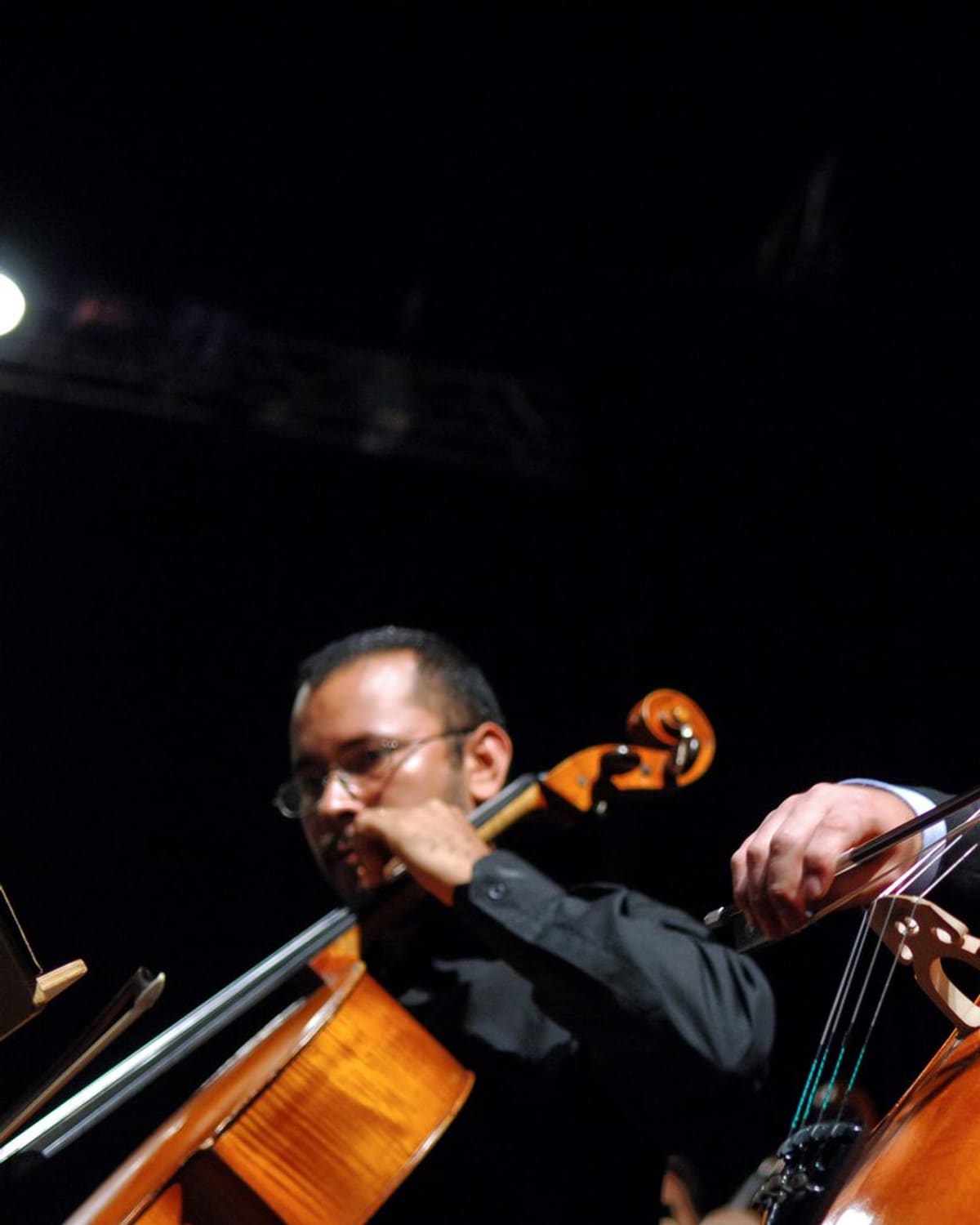
A cello is played in an embrace. The player wraps around it, cheek near the scroll, and draws out a sound so close to the human voice that people say they feel it in the chest before they hear it. A cellist spends years teaching the left hand exactly where to land and the bow arm exactly how much weight to give, until the effort disappears and only the singing is left. In a string section they breathe together and enter as one; alone with a suite, a single player can hold a whole room in the low warm glow of the instrument. It is a big, wooden, gloriously analog thing, and it takes a whole person to make it speak. Watch a cellist lean into a long note and you understand why we have always trusted this sound to carry the tender parts.
Kept nearby